


_edited.png)
Why Invest in Rebranding: Transforming Firm Results
- Feb 7
- 8 min read

Toronto firms looking to expand across North America face more than just crowded markets. When reputations are at stake, relying on a refreshed logo alone rarely secures an edge. True competitive strength comes from a comprehensive reimagining of brand identity—an integrated approach that connects internal culture, market positioning, and authentic communication. This guide breaks down what rebranding really means for service firms and outlines strategic choices that drive meaningful growth and lasting differentiation.
Table of Contents
Key Takeaways
Point | Details |
Comprehensive Rebranding | Effective rebranding goes beyond visual updates; it requires a strategic alignment of organizational identity with market expectations and internal culture. |
Strategic Triggers | Market evolution, strategic growth, and shifts in client perception are key drivers necessitating rebranding initiatives. |
Types of Rebranding | Firms can choose from various strategies, including brand revitalization and comprehensive rebranding, each with its own implications and risks. |
Cost and Risk Management | Proper planning, stakeholder engagement, and a budget allocated for change management are essential to mitigate rebranding risks and ensure ROI. |
Defining Rebranding for Service Firms
Rebranding represents a strategic transformation far beyond superficial visual updates. At its core, it’s a comprehensive reimagining of a service firm’s brand identity, positioning, and market communication. Rebranding evolution reveals complex organizational change that integrates emotional, strategic, and visual elements.
For service firms, rebranding is not merely about designing a new logo or updating color schemes. It’s a profound process of realigning organizational identity with market expectations, internal culture, and strategic objectives. This transformation encompasses several critical dimensions:
Visual Identity: Logo redesign, color palette updates
Messaging Strategy: Refining communication tone and narrative
Organizational Culture: Aligning internal values with external perception
Market Positioning: Redefining competitive differentiation
Successful rebranding requires understanding that these elements are interconnected. Brand communication must authentically reflect an organization’s mission, vision, and evolving market dynamics. Strategic repositioning impacts stakeholder perceptions dramatically, potentially reshaping how clients, employees, and partners view the firm.
The most effective rebranding initiatives are not cosmetic exercises but strategic interventions that signal meaningful organizational transformation. They communicate growth, adaptability, and a forward-thinking approach that resonates with target audiences.
Pro tip: Approach rebranding as a holistic strategic initiative, not just a design project, by involving stakeholders from multiple organizational levels.
Key Triggers for Rebranding Initiatives
Service firms encounter several strategic moments that signal the need for comprehensive rebranding. Strategic roadmaps reveal critical rebranding drivers that go beyond simple aesthetic updates, representing profound organizational transformations.
The primary triggers for rebranding initiatives typically include:
Market Evolution: Responding to shifting industry landscapes
Strategic Growth: Expanding into new market segments
Competitive Repositioning: Differentiating from industry competitors
Organizational Transformation: Reflecting internal cultural changes
Client Perception Management: Realigning brand image with current capabilities
Competitive dynamics often push service firms to reconsider their brand identity. Mechanics of organizational rebranding demonstrate that proactively adapting to market expectations is crucial for maintaining relevance and attracting high-value clients.
Successful rebranding is not about chasing trends but strategically communicating an organization’s evolving value proposition. It requires a nuanced understanding of internal capabilities, market opportunities, and stakeholder expectations. Professional service firms must view rebranding as a deliberate strategic intervention that signals growth, adaptability, and forward-thinking leadership.
Pro tip: Conduct comprehensive stakeholder interviews and market research before initiating any rebranding effort to ensure alignment with strategic objectives.
Types of Rebranding and Strategic Choices
Service firms face multiple approaches to rebranding, each with distinct strategic implications and organizational impacts. Systematic review of rebranding strategies reveals a nuanced spectrum of transformation possibilities that extend far beyond simple visual redesigns.
The primary types of rebranding strategies include:
Brand Revitalization: Refreshing existing brand elements
Partial Rebranding: Selective modification of brand components
Comprehensive Rebranding: Complete transformation of brand identity
Brand Repositioning: Shifting market perception and strategic focus
Cosmetic Rebranding: Surface-level aesthetic updates
Strategic choices in rebranding demand careful consideration of organizational capabilities and market dynamics. Change management perspectives on rebranding underscore the importance of understanding internal readiness and potential resistance to change.
Each rebranding approach carries unique risks and opportunities. Comprehensive rebranding represents the most extensive transformation, requiring significant investment and organizational alignment. Partial rebranding offers a more measured approach, allowing firms to incrementally evolve their brand identity while maintaining core brand equity and minimizing disruption.
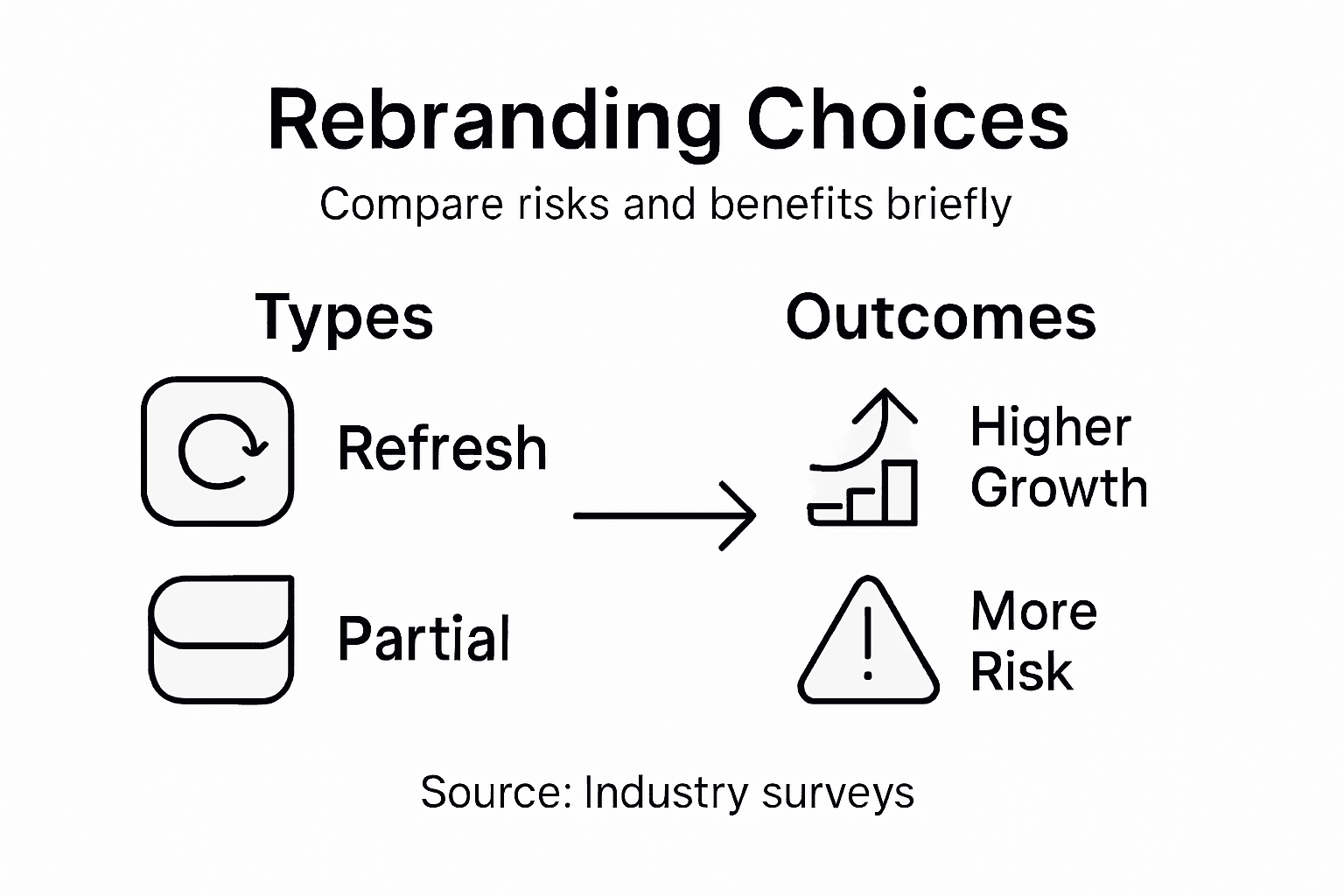
Here’s a comparison of major rebranding strategies for service firms and their unique implications:
Rebranding Type | Depth of Change | Main Risk | Key Benefit |
Brand Revitalization | Refresh of visual/messaging | Inconsistent market perception | Boosts relevance, maintains equity |
Partial Rebranding | Selective brand elements | Confusing brand identity | Reduces disruption, targets issues |
Comprehensive Rebranding | Total brand transformation | High resource demand | Clears legacy perceptions |
Brand Repositioning | Shifts perception/market | Alienating core clients | Accesses new opportunities |
Cosmetic Rebranding | Surface-level updates | Minimal long-term impact | Quick visual refresh |
Pro tip: Conduct a thorough internal assessment of organizational culture and market positioning before selecting your rebranding strategy to maximize potential success.
Business Impacts: Growth and Positioning
Rebranding represents a strategic lever for transforming service firm performance and market positioning. Transformative impacts of organizational rebranding demonstrate how strategic brand evolution can unlock substantial growth potential and reshape stakeholder perceptions.
The key business impacts of rebranding include:
Market Differentiation: Standing out from competitors
Stakeholder Perception: Enhancing reputation and credibility
Talent Attraction: Signaling innovation and progressive culture
Revenue Growth: Expanding market reach and client base
Operational Alignment: Creating coherence between brand promise and organizational capabilities
Strategic positioning emerges as a critical outcome of thoughtful rebranding. Multifaceted business growth strategies reveal that successful rebranding goes beyond visual updates, fundamentally reshaping how organizations communicate their value proposition and competitive advantages.

Effective rebranding transforms external perceptions while simultaneously driving internal organizational alignment. By realigning brand identity with strategic objectives, service firms can create a more compelling narrative that attracts high-value clients, inspires team members, and signals a forward-thinking approach to market challenges.
Pro tip: Develop a comprehensive rebranding strategy that balances external market signals with internal organizational capabilities to maximize strategic impact.
Cost Factors and Common Pitfalls
Rebranding represents a significant investment with complex financial and strategic implications. Comprehensive rebranding cost analysis reveals multiple layers of expenses that service firms must carefully evaluate before launching a transformation initiative.
Key cost factors in the rebranding process include:
Design Expenses: Logo, visual identity, and brand guidelines development
Communication Costs: Internal and external messaging strategy
Implementation Expenses: Updating physical and digital brand touchpoints
Training Investment: Preparing employees to represent new brand positioning
Stakeholder Management: Engagement and change management processes
Critical risks can dramatically inflate rebranding expenses. Mechanics of organizational rebranding risks highlight potential pitfalls that can undermine the entire initiative, such as insufficient internal alignment, poor communication, and misalignment with market expectations.
Most rebranding failures stem from inadequate planning and stakeholder engagement. Service firms must anticipate potential resistance, develop comprehensive communication strategies, and create clear pathways for implementing brand changes across all organizational levels. The most successful rebranding efforts treat the process as a strategic transformation, not merely a cosmetic update.
Below is a summary of typical cost areas in service firm rebranding, alongside the most common failure pitfalls:
Cost Factor | Hidden Pitfall | Financial Impact |
Visual Design | Underestimating complexity | High, if full redesign |
Communication Plan | Weak value articulation | Medium, avoidable with planning |
Implementation | Incomplete asset updates | High for physical/digital |
Employee Training | Insufficient culture buy-in | Moderate, prevents resistance |
Stakeholder Engagement | Failure to manage expectations | Very high, risk project failure |
Pro tip: Allocate at least 20% of your rebranding budget for change management and internal communication to mitigate potential implementation risks.
Managing Risk and Ensuring ROI
Rebranding requires a strategic approach to minimize potential risks and maximize investment returns. Strategic roadmap for professional service rebranding emphasizes the critical importance of data-driven planning and methodical implementation.
Key risk management strategies include:
Phased Implementation: Gradual rollout of brand changes
Performance Tracking: Establishing clear measurement metrics
Stakeholder Alignment: Ensuring internal and external buy-in
Search Engine Preservation: Maintaining organic search visibility
Continuous Feedback: Regular assessment of brand perception
ROI measurement demands comprehensive evaluation beyond traditional financial metrics. Systematic approach to rebranding impact reveals critical indicators such as brand loyalty, market share growth, and customer engagement levels that provide a holistic view of rebranding success.
Successful risk management requires transparent communication, cultural sensitivity, and a willingness to adapt. Service firms must create robust feedback mechanisms, continuously monitor brand performance, and remain agile in responding to market responses. The most effective rebranding strategies treat the process as an ongoing dialogue rather than a one-time event.
Pro tip: Develop a comprehensive measurement dashboard that tracks both quantitative financial metrics and qualitative brand perception indicators to gain a nuanced understanding of rebranding impact.
Unlock Growth Through Strategic Rebranding
Rebranding is more than just a fresh look. As this article highlights, it is a comprehensive transformation that aligns your firm’s identity with evolving market dynamics, internal culture, and strategic goals. If your firm faces challenges like unclear market positioning, inconsistent stakeholder perception, or difficulties in signaling growth and innovation, a well-planned rebranding strategy can be the solution. Addressing these pain points with thoughtful design, messaging, and organizational alignment is crucial to stand out, attract high-value clients, and boost revenue.
At Unnamed Marketing Company, we specialize in helping firms navigate these complex changes with a clear focus on results. Our expertise at the intersection of strategy, creativity, and performance ensures your rebranding initiative goes beyond surface-level updates to create lasting business impact. Explore our Digital Products designed to empower your brand and growth strategy.

Take the first step to transform your firm’s trajectory today. Visit Unnamed Marketing Company to discover how our growth strategy and brand consultancy can help you plan, position, and scale your business with intention. Don’t wait to communicate your firm’s value in a way that truly resonates—connect with us now to start your strategic rebranding journey.
Frequently Asked Questions
What is rebranding and why is it important for service firms?
Rebranding is a strategic transformation that goes beyond visual updates. It involves reimagining a service firm’s brand identity, positioning, and market communication to align with current market expectations and internal culture. Rebranding is crucial for service firms to stay relevant, attract high-value clients, and signal growth and adaptability.
What are the key triggers for initiating a rebranding process?
The key triggers for rebranding include market evolution, strategic growth into new segments, competitive repositioning, organizational transformation, and client perception management. Recognizing these triggers can help firms proactively respond to changes in their environment.
What are the different types of rebranding strategies that firms can adopt?
Firms can choose from several rebranding strategies, including brand revitalization (refreshing existing elements), partial rebranding (selective modifications), comprehensive rebranding (complete transformation), brand repositioning (shifting market perception), and cosmetic rebranding (surface-level updates). Each has unique implications for the organization.
How can a service firm ensure a successful rebranding initiative?
To ensure successful rebranding, firms should take a holistic approach by involving stakeholders, conducting market research, aligning internal values with external perception, and communicating the brand’s new identity clearly. Additionally, a phased implementation along with performance tracking and feedback mechanisms can significantly enhance the chances of success.
Recommended

Comments