


_edited.png)
Marketing Planning: Strategic Impact on Business Growth

Every growth-focused Canadian or American business faces moments when marketing feels like guesswork instead of strategy. The true challenge lies in creating a plan that connects real market opportunities with your company’s unique strengths. By embracing marketing planning as a dynamic management process, you can transform vague goals into focused action steps that adapt to fast-changing markets and set your brand apart from competitors.
Table of Contents
Key Takeaways
Point | Details |
Strategic Marketing Planning | A structured approach aligning organizational goals with market opportunities is essential for sustainable competitive advantage. |
Types of Marketing Plans | Understanding the distinctions between strategic, tactical, and operational plans helps organizations create a comprehensive marketing approach. |
Key Steps in the Planning Process | Developing a market-oriented mission, conducting situation analysis, setting objectives, and formulating strategies are critical to successful marketing planning. |
Avoiding Common Pitfalls | Establish clear goals, conduct thorough market research, and ensure interdepartmental coordination to enhance the effectiveness of marketing plans. |
Defining marketing planning and core concepts
Marketing planning is a strategic management process that transforms organizational goals into actionable marketing strategies. Unlike generic business planning, marketing planning focuses specifically on connecting market opportunities with company capabilities. Strategic management approaches reveal this process as a dynamic framework for achieving sustainable competitive advantage.
At its core, marketing planning encompasses several critical components:
Analyzing current market conditions
Identifying target customer segments
Establishing clear marketing objectives
Developing tactical implementation strategies
Creating performance measurement mechanisms
The complexity of marketing planning extends beyond traditional linear approaches. Contemporary models recognize marketing planning as an adaptive process that responds continuously to changing competitive environments. This means strategies are not static documents but living frameworks that evolve with market dynamics.
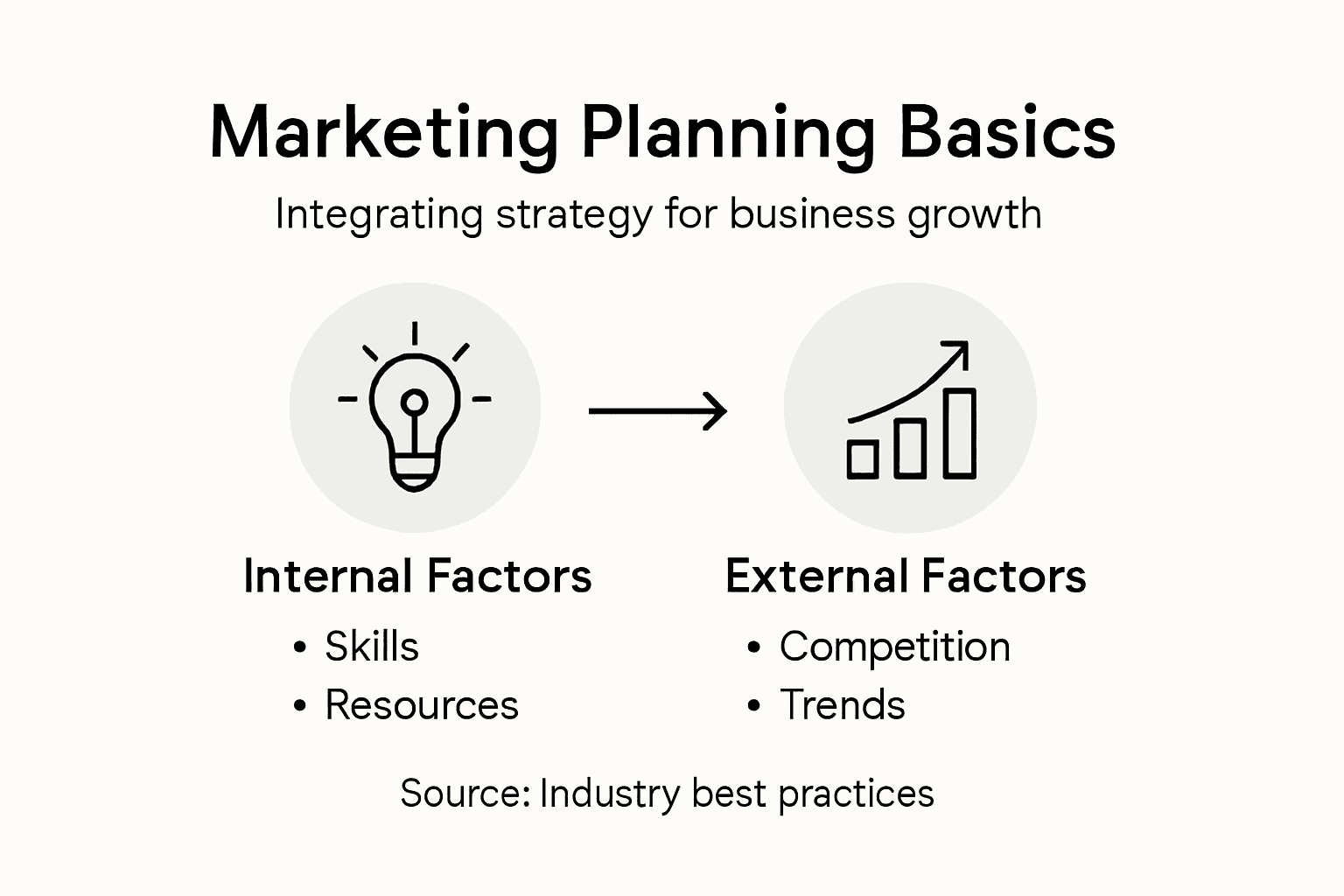
Successful marketing planning requires a holistic perspective that integrates internal capabilities with external market opportunities. Organizations must balance rational analysis with creative problem-solving, ensuring marketing efforts remain both structured and flexible.
Pro tip: Treat your marketing plan as a strategic compass, not a rigid roadmap - be prepared to adjust your direction based on real-world feedback and emerging market signals.
Types of marketing plans and their distinctions
Marketing plans are not one-size-fits-all strategies, but rather nuanced frameworks designed to address specific organizational needs. Strategic marketing approaches reveal distinct types of marketing plans that serve different purposes and organizational objectives.
The primary types of marketing plans include:
Strategic Marketing Plans: Long-term frameworks focusing on overall market positioning and competitive strategy
Tactical Marketing Plans: Short-term plans targeting specific campaigns and immediate marketing actions
Operational Marketing Plans: Detailed blueprints translating strategic goals into daily marketing activities
Each plan type operates at a different level of organizational complexity. Marketing strategy levels demonstrate how these plans interact, with strategic plans providing the overarching vision and tactical plans executing specific initiatives.
Understanding the distinctions between these marketing plan types is crucial for developing a comprehensive and adaptable marketing approach. Strategic plans set the broad direction, tactical plans create targeted campaigns, and operational plans ensure day-to-day execution aligns with organizational goals.
Here’s a concise summary comparing the main types of marketing plans:
Plan Type | Time Horizon | Main Focus | Typical Users |
Strategic | 3-5 years | Market positioning, vision | Senior leadership |
Tactical | 6-12 months | Campaign execution | Marketing managers |
Operational | Daily/Weekly | Task implementation | Project teams |
Pro tip: Design your marketing plans as interconnected layers, ensuring each level communicates and supports the others for maximum strategic effectiveness.
Essential steps in the marketing planning process
Strategic marketing planning requires a systematic approach that transforms organizational vision into actionable marketing strategies. The process is not linear but an adaptive framework that demands continuous refinement and strategic thinking.
The essential steps in developing a comprehensive marketing plan include:
Market-Oriented Mission Definition
Clarify organizational goals
Align marketing objectives with overall business strategy
Establish clear vision and purpose
Comprehensive Situation Analysis
Evaluate internal capabilities
Analyze market dynamics
Assess competitive landscape
Objective Setting
Develop specific, measurable marketing goals
Create realistic and achievable targets
Establish key performance indicators
Strategy Formulation
Design targeted marketing approaches
Identify unique value propositions
Develop competitive positioning strategies
These interconnected steps form a dynamic management process that enables organizations to adapt quickly to changing market conditions. Successful marketing planning requires flexibility, continuous learning, and strategic alignment across all organizational levels.
Implementing these steps effectively transforms marketing from a tactical function into a strategic driver of business growth. Each stage builds upon the previous one, creating a comprehensive and responsive marketing framework.

Pro tip: Treat your marketing plan as a living document that requires regular review and adaptation, not a static blueprint.
Key benefits for business growth and positioning
Strategic marketing planning provides businesses with a comprehensive framework for achieving sustainable growth and competitive advantage. By systematically aligning organizational resources with market opportunities, companies can transform marketing from a cost center into a strategic growth engine.
The key benefits of strategic marketing planning include:
Enhanced Market Positioning
Clearly define unique value propositions
Differentiate from competitors
Establish strong brand identity
Optimized Resource Allocation
Focus marketing investments strategically
Minimize wasteful spending
Maximize return on marketing efforts
Proactive Competitive Adaptation
Anticipate market changes
Develop flexible response strategies
Maintain competitive edge
Performance Measurement
Set clear, measurable marketing objectives
Track progress systematically
Enable data-driven decision making
Business growth strategies demonstrate that companies with structured marketing plans consistently outperform those without strategic frameworks. The ability to identify target markets, articulate competitive advantages, and set realistic goals transforms marketing from a reactive function to a proactive business driver.
Successful organizations recognize that marketing planning is not a one-time event but an ongoing process of strategic refinement and continuous improvement.
This table highlights business impact areas addressed by strategic marketing planning:
Impact Area | How Marketing Planning Helps | Example Outcome |
Competitive Advantage | Aligns strategy with market trends | Gaining new market share |
Resource Use | Directs budgets to priorities | Higher marketing ROI |
Goal Achievement | Sets measurable targets | Exceeding sales objectives |
Adaptability | Enables rapid course correction | Responds quickly to disruptions |
Pro tip: Regularly review and update your marketing plan to ensure it remains aligned with evolving business goals and market dynamics.
Common pitfalls and mistakes to avoid
Marketing planning errors can significantly undermine a company’s growth potential. Many organizations fall into predictable traps that compromise their strategic effectiveness and waste valuable resources.
Key marketing planning pitfalls include:
Lack of Clear Goals
Vague, unmeasurable objectives
Missing specific performance targets
No defined success metrics
Insufficient Market Research
Relying on assumptions
Neglecting competitive analysis
Ignoring customer feedback
Short-Term Tactical Thinking
Prioritizing immediate results
Sacrificing long-term strategy
Reactive instead of proactive planning
Poor Interdepartmental Coordination
Marketing operating in isolation
Misaligned organizational objectives
Communication breakdowns
Strategic planning challenges reveal that most mistakes stem from a disconnect between intention and execution. Businesses often develop elaborate plans that look impressive on paper but fail in real-world implementation.
Successful marketing planning requires a holistic approach that balances analytical rigor with adaptable strategic thinking. Organizations must remain flexible while maintaining clear strategic direction.
Pro tip: Create quarterly review checkpoints to assess your marketing plan’s effectiveness and make data-driven adjustments.
Unlock Strategic Growth with Expert Marketing Planning
Understanding the critical role of strategic marketing planning is the first step toward transforming your business growth. If you find yourself struggling with aligning your marketing goals to actionable strategies or lacking the flexibility to adapt in a changing market, you are not alone. Key challenges like setting clear objectives, balancing tactical and operational plans, and measuring performance are common obstacles many businesses face. Mastering these concepts can elevate your competitive advantage and resource allocation, turning marketing from a cost center into a growth engine.
At Unnamed Marketing Company, we specialize in bridging the gap between strategic vision and real-world impact through our tailored services. Explore our Digital Products | Unnamed Marketing Company to find innovative tools designed to simplify your marketing planning process and enhance adaptability.

Ready to break free from common planning pitfalls and position your business for sustainable success? Visit Unnamed Marketing Company and partner with experts who will help you craft marketing strategies that are both dynamic and purpose-driven. Start planning with intention and scale with confidence today.
Frequently Asked Questions
What is marketing planning?
Marketing planning is a strategic management process that connects organizational goals with actionable marketing strategies, focusing on aligning market opportunities with company capabilities.
What are the main types of marketing plans?
The primary types of marketing plans include Strategic Marketing Plans (long-term vision), Tactical Marketing Plans (short-term campaigns), and Operational Marketing Plans (daily activities).
What are the essential steps in the marketing planning process?
The essential steps include defining a market-oriented mission, conducting a comprehensive situation analysis, setting specific objectives, and formulating targeted marketing strategies.
What are common pitfalls to avoid in marketing planning?
Common pitfalls include lack of clear goals, insufficient market research, short-term tactical thinking, and poor interdepartmental coordination.
Recommended


Comments