


_edited.png)
Brand Identity Process: Build a Distinctive Business Image
- Feb 23
- 12 min read

Choosing your brand’s values and vision is not just about putting nice words on paper. For many Canadian and American business owners, these choices define how you show up for customers and how your team makes tough calls. Core brand values serve as the compass guiding your story, behaviors, and decisions, shaping every aspect of your customer experience. This guide will help you create a strong brand foundation that builds real trust and sets you up for future growth.
Table of Contents
Quick Summary
Key Takeaway | Explanation |
1. Define core brand values clearly | Articulate 3-5 values that guide decisions and reflect the business’s true principles. This helps avoid conflicting messages and actions later. |
2. Create a compelling vision statement | Develop a vision outlining where your business aspires to be in three to five years, inspiring the team towards shared long-term goals. |
3. Ensure visual and verbal consistency | Align your logo, colors, and messaging across all platforms to build brand recognition and trust among customers. |
4. Gather feedback from your audience | Test brand identity with real people to uncover gaps between intended messaging and actual perceptions, helping refine brand strategy effectively. |
5. Regularly refine your brand based on insights | Prioritize and act on feedback, adjusting branding elements as necessary to reflect audience understanding and preferences, ensuring ongoing relevance. |
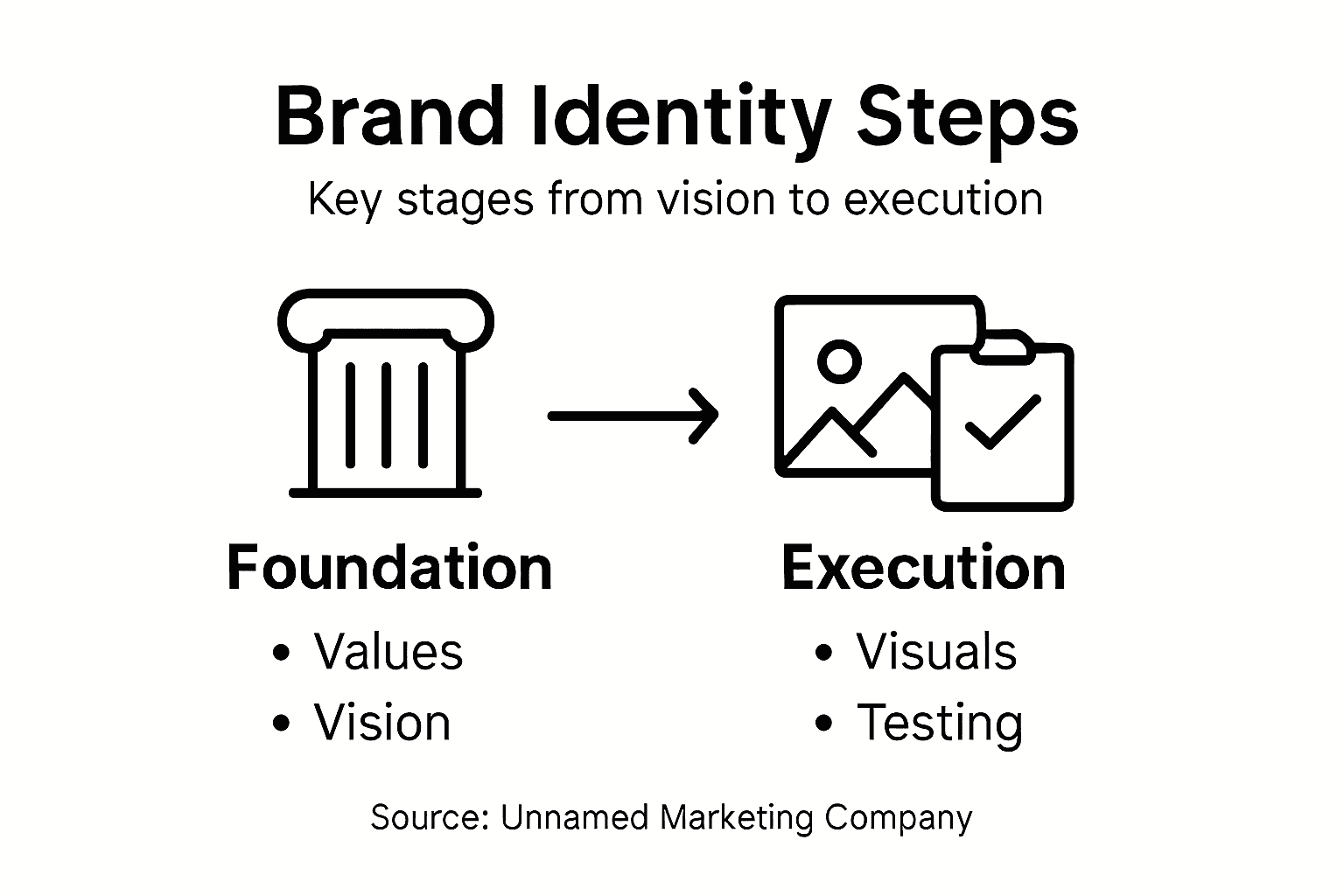
Step 1: Define core brand values and vision
Your core brand values are the bedrock of everything your business does. They’re the principles that guide decisions, shape how you treat customers, and determine what your brand stands for in the marketplace. Defining them clearly now saves you from conflicting messages and inconsistent actions down the road.
Start by asking yourself what truly matters to your business. Not what sounds good on a website, but what actually drives your decisions when money’s on the line. Think about the moments when you’ve turned down business because it didn’t feel right, or when you’ve gone the extra mile for a customer. Those moments reveal your real values.
Write down three to five core values that resonate most. Consider using these categories to guide your thinking:
How you treat employees and customers
What quality standards you refuse to compromise on
How you show up during difficult situations
What you believe about your industry or market
Why your business exists beyond making money
Once you’ve identified your values, define them specifically. “Integrity” means something different to every business. Does it mean transparent pricing? No cutting corners? Fair labor practices? Write a two-to-three sentence explanation for each value so your team understands what it actually means in practice.
Next, craft your vision statement. This is where your business is headed. Not where you are today, but where you’re building toward in the next three to five years. Your vision should feel ambitious but achievable, and it should inspire your team.
Here is a summary of key differences between core brand values and a brand vision statement:
Aspect | Core Brand Values | Brand Vision Statement |
Purpose | Guide decisions and behaviors | Define future direction |
Focus | Present actions and beliefs | Long-term goals and aspirations |
Impact | Build consistency and trust | Inspire team and stakeholders |
Example Application | Influences hiring and customer service | Guides strategic planning |
Core brand values serve as the compass guiding your story, behaviors, and decisions, creating alignment between your mission and customer expectations. A clear vision paired with solid values makes every business decision easier because you have a framework to evaluate opportunities against.
Your vision might focus on market position (“We want to be the trusted choice for small business owners”), customer impact (“We help entrepreneurs reclaim time with their families”), or industry change (“We’re reshaping how businesses approach growth”).
Your values and vision should pass the real-world test: would your team make decisions based on these if you weren’t in the room?
Get your team involved in this conversation. Ask frontline staff what they think your values are. Ask customers what they believe your business stands for. You might be surprised by the gaps between your intentions and how people actually experience your brand.
Pro tip: Write your values and vision on a physical card and keep it at your desk for the next month. Before major decisions, read it. If a decision doesn’t align, reconsider it.
Step 2: Craft visual and verbal brand elements
Now that you know what your brand stands for, it’s time to make it visible and audible. Your visual and verbal elements are how customers actually experience your brand. They’re the difference between someone recognizing you immediately or confusing you with a competitor.
Start with your visual identity. This includes your logo, color palette, typography, and imagery style. Your logo doesn’t need to be complicated. Think of how Apple’s simple apple or Nike’s swoosh work across any size or medium. Your logo should be memorable, scalable, and represent your brand personality in one image.

Choose two to three core brand colors. These colors should reflect your brand personality and stand out in your industry. A law firm and a children’s toy company use color completely differently for good reason. Your colors should appear consistently across your website, marketing materials, packaging, and social media. This repetition builds recognition.
Select typography that matches your brand voice. A luxury jewelry brand uses elegant, serif fonts. A tech startup might use clean, modern sans-serif. Your font choices matter because they communicate personality before anyone reads a single word.
Your imagery style is equally important. Do you use photography, illustration, or both? Are your images bright and energetic or moody and sophisticated? Consistent imagery style reinforces recognition and trust across all channels, making your brand instantly identifiable whether someone sees you on Instagram, your website, or a billboard.
Next, develop your verbal identity. This is your brand voice and messaging. How do you talk to customers? Are you formal or casual, witty or straightforward, educational or entertaining? Write three to five core brand messages that explain what you do and why it matters.
Creat a tone guide document that shows how your brand sounds. Include examples of what you’d say and what you wouldn’t say. This keeps your team consistent whether they’re writing social posts, emails, or customer service responses.
Your visual and verbal elements work together. If your brand looks playful but sounds corporate, something feels off to customers.
Test your elements with a small group. Show them your logo, colors, fonts, and sample messaging. Do these elements feel like they represent your values? Do they stand out in your industry? Be willing to adjust based on honest feedback.
Pro tip: Create a simple one-page brand style guide showing your logo, colors, fonts, and tone examples, then share it with everyone who represents your brand.
This table outlines common visual and verbal brand element pitfalls and their effects on customer perception:
Pitfall | Visual Impact | Verbal Impact | Customer Effect |
Inconsistent colors | Weak recognition | Not applicable | Brand feels unprofessional |
Complex logo design | Overwhelms viewers | Not applicable | Decreased memorability |
Mismatched tone | Not applicable | Confusing language | Diminished trust |
Generic messaging | Not applicable | Lack of differentiation | Fails to engage audience |
Step 3: Align brand messaging across touchpoints
Your brand lives in many places. Your website, social media, email, packaging, customer service interactions, and in-person meetings all tell a story. If that story changes depending on where customers encounter you, they’ll feel confused instead of connected.
Brand alignment means your mission, values, voice, and messaging sound the same everywhere. A customer reading your email should recognize the same personality they experience on your website or in a store. This consistency builds trust because people know what to expect from you.
Start by mapping all your customer touchpoints. Write them down:
Website and landing pages
Social media profiles
Email campaigns
Packaging and labels
Customer service interactions
Sales conversations
Physical locations or events
Advertising and promotional materials
Next, audit your current messaging. Pull sample content from each touchpoint and read it together. Does it sound like the same brand? Does your website voice match your social media voice? Are you using consistent terminology? You might find jarring inconsistencies that explain why customers feel disconnected.
Create a messaging framework document that your entire team uses. Include your core brand messages, key talking points, tone guidelines, and specific phrases you always use. This isn’t about robotic consistency. It’s about ensuring everyone speaks from the same playbook.
Brand alignment ensures consistent messaging across all channels, fostering customer trust and creating a seamless experience. When your team knows your messaging framework, they make better decisions about what to say in emails, social posts, and customer conversations.
Train your team on these guidelines. Your frontline staff, customer service reps, and social media managers need to understand your brand voice and values. A customer service rep who understands your brand personality can resolve complaints in a way that actually strengthens loyalty.
Measure your alignment by asking customers what they think your brand stands for. Do they consistently describe the same values and personality? If different customer segments describe you differently, you have alignment problems worth fixing.
Misaligned messaging is like having multiple people tell the same story with completely different details. Customers stop believing any of it.
Review and update your messaging quarterly. Your business evolves. Your messaging should too. But changes should be intentional and communicated clearly to your team, not accidental inconsistencies.
Pro tip: Create a one-page messaging cheat sheet for your team with approved phrases, tone examples, and messaging dos and don’ts, then refer to it before publishing any customer-facing content.
Step 4: Test brand identity with your audience
You’ve built something you believe in. Now comes the moment of truth. Testing your brand identity with real people reveals whether your internal vision matches how customers actually perceive you. The gap between intention and reality is where most brands stumble.
Testing isn’t about getting validation. It’s about identifying blind spots before you invest heavily in marketing. You might discover that your logo reads differently than intended, your messaging confuses your target market, or your visual identity appeals to the wrong audience entirely.
Start with brand awareness testing. Show your logo, colors, and visual identity to a small group of people who don’t know your brand yet. Ask them what they think the brand sells or stands for. Their answers reveal whether your visual identity communicates your positioning effectively. If ten people guess ten different things, you have a clarity problem.
Next, gather first impressions of your visual identity and messaging from your target audience specifically. Do they respond positively? Does your brand feel trustworthy, innovative, professional, or approachable depending on what you’re going for? Do the colors, fonts, and imagery feel aligned to them?
Conduct simple perception surveys. Ask people basic questions:
What’s the first word that comes to mind when you see this brand?
What do you think this company does?
Would you trust this brand with your business?
Does this brand feel different from competitors?
What values does this brand seem to have?
Analyze the gaps between your intended positioning and actual perception. If you positioned yourself as “luxury and exclusive” but people see you as “expensive,” that’s a critical insight worth fixing. These gaps show you where your messaging or visual elements aren’t landing.
Test with different audience segments separately. Your brand might resonate perfectly with one group but completely miss with another. A design that appeals to millennials might alienate Gen X customers. Understanding these differences helps you refine your identity before launch.
Use data-driven testing methods to validate your brand identity across different markets or customer segments. Measure not just perception, but actual business impact. Does your new brand identity lead to higher conversion rates or customer loyalty? The numbers tell the real story.
Testing reveals truth. The uncomfortable kind. Be ready to listen and make changes, even if they’re not what you expected.
Don’t get defensive about feedback. If multiple people say your messaging is confusing, it’s confusing. That’s not a personal attack. That’s actionable intelligence.
Pro tip: Test your brand with 10-15 people from your target audience before finalizing it. Ask open-ended questions, listen more than you talk, and prioritize feedback that appears repeatedly across multiple testers.
Step 5: Refine identity based on feedback
Feedback is a gift, even when it stings. You’ve gathered insights from real people about how your brand lands. Now you translate that feedback into concrete changes. This is where good brands become great ones.
Start by organizing your feedback into themes. Don’t obsess over one person’s comment. Look for patterns. If three people mention confusion about your positioning and five say your colors feel dated, those are signals worth acting on. Patterns reveal truth. Outliers are just noise.
Prioritize feedback by impact. Ask yourself which changes would most improve how customers perceive your brand. Some feedback requires small tweaks. Other feedback demands bigger shifts. Focus on the changes that address the most common concerns or biggest gaps between your intention and perception.
Decide what to change and what to keep. Not all feedback deserves action. You might get feedback from people outside your target market. You might get personal preferences that don’t represent your audience. Your job is to filter feedback through the lens of your brand strategy and target customer.
Make your refinements thoughtfully. Combining qualitative and quantitative research helps identify areas for improvement and ensures changes are grounded in data rather than gut feeling. You might adjust your logo slightly, refresh your color palette, clarify your messaging, or strengthen your positioning statement.
Test your refinements with a second group. Don’t assume one round of feedback is enough. Show your refined brand to new people from your target audience and ask the same questions. Have your changes improved perception? Do new issues emerge? Iteration is normal and necessary.
Create a refinement summary document. What feedback did you receive? What changes did you make? Why did you make those choices? This document keeps your team aligned and explains your decisions when questions arise later.
Update your brand guidelines with the refined elements. Your logo might look slightly different. Your messaging might be sharper. Your color palette might be updated. Make sure these changes are documented clearly so your entire team understands the new direction.
Refinement isn’t failure. It’s intelligence in action. The brands that get it right are the ones willing to iterate.
Schedule regular check-ins to monitor how your refined brand performs in the market. Set a date three to six months out to evaluate whether the changes are working. Are customers responding better? Is brand recognition improving? Are conversion rates increasing?
Pro tip: Create a simple feedback tracking spreadsheet with themes, frequency, and your response to each piece of feedback. This keeps you accountable and shows your team you actually listened.
Build a Powerful Brand Identity That Drives Growth
Struggling to turn your core values and bold vision into a clear, consistent brand that truly connects with your audience? The journey to crafting a distinctive business image often hits roadblocks like inconsistent messaging, confusing visual elements, or unclear customer perception. This article highlights how defining your brand values, aligning messaging across touchpoints, and testing with your audience are essential steps for success.
At Unnamed Marketing Company, we understand these challenges. Our strategic approach helps you transform your brand identity into a vibrant, trustworthy presence that stands out. Through our Digital Products | Unnamed Marketing Company and customized growth strategies, we partner with you to clarify your brand story and create cohesion across all channels.

Unlock your brand’s full potential with expert guidance that bridges creativity and performance. Visit Unnamed Marketing Company today to explore how we help businesses like yours align vision with impactful design and messaging. Take the first step toward a distinctive, growth-driving brand identity by discovering our proven frameworks and actionable solutions.
Frequently Asked Questions
How do I define my core brand values?
To define your core brand values, start by reflecting on what truly matters to your business. Identify three to five key principles that guide your decisions and define your brand’s character, then write a brief description for each to clarify their meaning in practice.
What do I include in my brand vision statement?
Your brand vision statement should outline where you see your business in the next three to five years. Focus on aspirational goals that inspire your team and reflect your long-term direction, ensuring it aligns with your core values.
How can I create a cohesive visual identity for my brand?
To create a cohesive visual identity, develop a simple logo, select a consistent color palette, and choose typography that reflects your brand’s personality. Ensure these elements are applied uniformly across all platforms, such as your website and social media, to enhance brand recognition.
What steps can I take to align messaging across all touchpoints?
To align messaging across all touchpoints, first, map out every customer interaction your brand has, then audit your current messaging for consistency. Create a messaging framework that includes key brand messages and tone guidelines to ensure all team members communicate with the same voice.
How do I test my brand identity with my audience?
To test your brand identity, gather a small group of people unfamiliar with your brand and show them your visual elements and messaging. Ask open-ended questions about their impressions to identify any gaps between your intended positioning and their perception, then analyze the feedback for actionable insights.
What should I do with the feedback I receive on my brand identity?
Organize the feedback you receive into common themes and prioritize changes based on impact. Make thoughtful refinements to your brand based on this feedback and test the revised elements with another audience group to ensure improved perception.
Recommended

Comments