


_edited.png)
What Is Brand Identity and Why It Drives Growth

Competing in the North American market demands more than a polished logo or catchy tagline. Many Canadian service firms discover that true differentiation stems from a well-defined brand identity, not just visual design. Without a clear brand strategy, marketing efforts risk blending into the crowd, focusing only on industry standards instead of what makes your firm unique. This article helps clarify the critical differences between brand identity and brand image, revealing how a purpose-driven approach shapes reputation and influences client loyalty.
Table of Contents
Key Takeaways
Point | Details |
Brand Identity vs. Brand Image | Brand identity is what a company intentionally creates, while brand image is customer perception; both must align for success. |
Core Elements | Effective brand identity includes vision, values, positioning, personality, and promise, integrating them for cohesive messaging. |
Continuous Evolution | Brands must adapt to cultural shifts and consumer feedback to maintain relevance and authenticity in a dynamic market. |
Common Pitfalls | Avoiding brand dilution, inconsistent messaging, and superficial design is crucial for building trust and loyalty with consumers. |
Defining Brand Identity and Common Myths
Brand identity represents the strategic, purposeful representation of a company’s core values, personality, and unique market positioning. Unlike popular misconceptions, brand identity goes far beyond visual design elements like logos or color palettes. Brand identity fundamentally defines how a business communicates its distinctive qualities to differentiate itself from competitors.
At its core, brand identity encompasses several critical components:
Visual representations (logos, color schemes, typography)
Communication style and tone
Core values and mission statement
Consistent messaging across platforms
Emotional connection with target audience
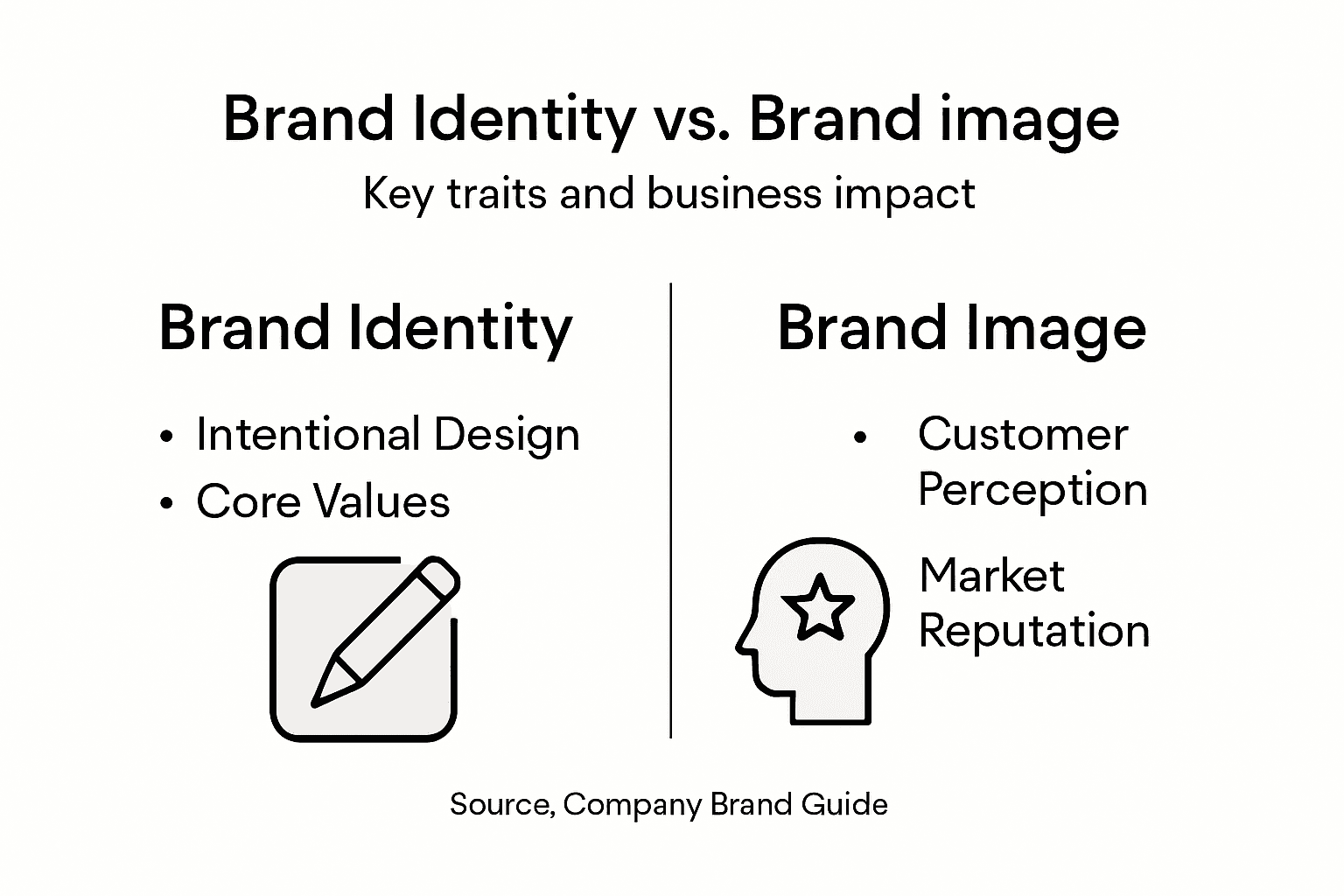
Many businesses mistakenly conflate brand identity with brand image, which are distinctly different concepts. Brand identity is what a company intentionally creates and projects, while brand image represents how customers actually perceive the brand. This crucial distinction means organizations must carefully craft their identity to influence public perception.
Here’s a comparison of brand identity vs. brand image, highlighting key differences and business impact:
Aspect | Brand Identity | Brand Image | Business Impact |
Definition | Company-created representation | Customer-perceived brand | Influences reputation |
Control | Internally controlled and designed | Formed externally by audience | Shapes trust and loyalty |
Purpose | Highlight unique values and mission | Reflects customer beliefs and feelings | Drives purchase decisions |
Alignment needed | Must align with market positioning | Should match desired identity for success | Ensures consistent brand strategy |
Cultural shifts and digital transformation have dramatically reshaped how brands construct their identities. Brand authenticity has become increasingly vital as consumers demand transparency and meaningful connections with the brands they support.
Pro tip: Conduct a comprehensive audit of your current brand identity to ensure all elements consistently communicate your core values and market positioning.
Core Elements of a Powerful Brand Identity
Brand identity is a strategic framework that goes beyond superficial design elements, requiring systematic methods to create meaningful differentiation. Successful brands understand that their identity is a comprehensive ecosystem of interconnected components that communicate their unique value proposition.
The core elements of a powerful brand identity include:
Vision: The long-term aspirational goals and purpose of the organization
Values: Fundamental beliefs that guide organizational behavior and decision-making
Positioning: Distinctive place in the market that sets the brand apart from competitors
Personality: Human-like characteristics that make the brand relatable and memorable
Promise: Clear commitment to customers about what they can consistently expect
Building a cohesive brand identity requires more than creating attractive visuals. It demands a holistic approach that integrates strategic communication, emotional resonance, and consistent representation across all customer touchpoints. Organizations must carefully craft each element to create a unified and compelling narrative that connects with their target audience.

Cultural authenticity plays a critical role in modern brand identity development. Companies must ensure their external communications genuinely reflect their internal culture and values, creating transparency that builds trust with consumers.
Pro tip: Conduct quarterly brand audits to ensure your brand identity remains aligned with your evolving business strategy and market expectations.
Types of Brand Identity for Service Firms
Service firms face unique challenges in developing brand identity, requiring specialized approaches to differentiate themselves in competitive markets. Unlike product-based businesses, professional service brands must communicate intangible value through their identity, emphasizing expertise, trust, and client relationships.
The primary types of brand identity for service firms include:
Expertise-Driven Identity: Positioning the firm as a thought leader in specific domains
Relationship-Centered Identity: Emphasizing personal connections and client trust
Innovation-Focused Identity: Highlighting cutting-edge methodologies and approaches
Cultural Identity: Showcasing unique organizational values and workplace philosophy
Performance-Based Identity: Demonstrating consistent results and measurable impact
Successful service firm brand identities go beyond surface-level marketing. They require deep alignment between external communication and internal capabilities. This means every touchpoint - from client interactions to marketing materials - must consistently reflect the firm’s core competencies and unique value proposition.
Modern service firms must also recognize that brand identity is not static. Client perception continuously evolves, demanding agile approaches that incorporate feedback and demonstrate adaptability. Organizations need robust mechanisms to bridge the gap between their intended brand identity and how clients actually experience their services.
Pro tip: Develop a comprehensive brand identity guidebook that serves as a living document, allowing periodic refinements based on market feedback and organizational growth.
Brand Identity in Practice: Real-World Examples
Real-world brand identities demonstrate how strategic storytelling and design create powerful market differentiation. Successful brands transform abstract concepts into tangible experiences that resonate deeply with their target audiences, proving that brand identity is far more than just a logo or visual aesthetic.
Compelling brand identity examples across different sectors include:
Technology Sector: Brands like Apple that blend innovation with minimalist design
Athletic Wear: Nike’s identity built on empowerment and athletic achievement
Automotive: Tesla’s brand representing technological disruption and sustainability
Coffee Culture: Starbucks positioning itself as a lifestyle and community experience
Professional Services: Consulting firms emphasizing expertise and thought leadership
These brands share common characteristics that elevate their identity beyond mere marketing. They communicate a clear narrative, demonstrate consistent values, and create emotional connections that transcend transactional relationships. Authentic storytelling becomes the cornerstone of their brand identity, allowing customers to see themselves reflected in the brand’s mission and values.
Successful brand identity requires continuous evolution. Organizations must remain adaptable, listening to customer feedback and anticipating market shifts while maintaining their core essence. This dynamic approach ensures the brand remains relevant and compelling in an increasingly competitive landscape.
Pro tip: Conduct annual brand identity workshops that bring together cross-functional teams to reassess and refine your organization’s narrative and visual representation.
Building Brand Identity: Key Steps and Challenges
Developing a successful brand identity requires a systematic, data-driven approach that goes beyond superficial design elements. Organizations must construct a comprehensive strategy that integrates market research, competitive analysis, and deep understanding of their core values and audience expectations.
Key steps in building a robust brand identity include:
Market Research: Conducting comprehensive audience and competitor analysis
Value Proposition: Defining unique differentiators and core organizational values
Visual Identity: Developing consistent design elements and communication standards
Storytelling Framework: Creating a compelling narrative that resonates with target audiences
Stakeholder Alignment: Ensuring internal team understanding and commitment to brand principles
Challenges in brand identity development are multifaceted and complex. Organizations often struggle with maintaining consistency across diverse communication channels, balancing authenticity with market expectations, and creating a brand narrative that feels both distinctive and genuine. Digital transformation has further complicated these efforts, requiring brands to be more adaptive and responsive than ever before.
Successful brand identity is not a one-time achievement but an ongoing process of refinement and adaptation. Companies must continuously evaluate their brand’s performance, gather feedback, and be willing to make strategic adjustments while preserving their core identity and values.
Pro tip: Implement a quarterly brand identity audit that includes customer feedback, internal stakeholder insights, and competitive landscape analysis.
Common Pitfalls When Developing Brand Identity
Brand identity development is fraught with strategic challenges that can undermine organizational growth. Recognizing and avoiding these common pitfalls is crucial for creating a compelling and sustainable brand narrative that resonates with target audiences.
Key brand identity development mistakes include:
Brand Dilution: Attempting to appeal to everyone and losing core identity
Inconsistent Messaging: Presenting conflicting brand communications across platforms
Superficial Design: Prioritizing trendy visuals over meaningful brand values
Neglecting Emotional Connection: Failing to create genuine audience engagement
Lack of Market Research: Making assumptions instead of understanding customer needs
Historical case studies demonstrate the devastating consequences of brand identity missteps. Companies like Motorola, Xerox, and Blackberry serve as cautionary tales, illustrating how inconsistent messaging and loss of strategic focus can rapidly erode market position and consumer trust. Successful brands understand that brand identity is a dynamic, holistic concept requiring continuous refinement and genuine alignment with organizational values.
Below is a summary table of common pitfalls in brand identity development and ways to address them:
Pitfall | Consequence | Solution |
Brand dilution | Loss of market differentiation | Focus on target audience |
Inconsistent messaging | Confusion and distrust | Establish strict communication guides |
Superficial design | Weak emotional connection | Prioritize authentic storytelling |
Ignoring market research | Misaligned brand strategies | Invest in ongoing audience analysis |
Neglecting emotional ties | Reduced customer loyalty | Build narratives around core values |
Modern organizations must adopt an adaptive approach to brand identity, recognizing that digital transformation has fundamentally changed how brands communicate and connect with audiences. This requires ongoing research, willingness to evolve, and a commitment to authenticity that goes beyond superficial marketing tactics.
Pro tip: Create a comprehensive brand guidelines document that serves as a living resource, updated quarterly to reflect market insights and organizational evolution.
Strengthen Your Brand Identity to Drive Real Growth
Building a clear and authentic brand identity is vital to standing out in today’s crowded market. The challenges outlined in the article show how inconsistent messaging, superficial design, and lack of emotional connection can weaken a brand’s impact. If you are looking to align your company’s vision, values, and market positioning into a powerful identity that truly resonates with your audience, you need a strategic partner who combines creativity with measurable results.
Discover how our tailored growth strategy and brand design expertise empower businesses to build cohesive, authentic identities that foster trust and loyalty. Explore our range of Digital Products designed to support your brand’s evolution.

Take control of your brand story now by partnering with Unnamed Marketing Company. Visit our main site to see how we integrate strategy, creativity, and performance into solutions that help you clarify your direction and grow with intention. Start transforming your brand identity today with proven frameworks and expert guidance.
Frequently Asked Questions
What is brand identity?
Brand identity is the strategic representation of a company’s core values, personality, and unique market positioning, encompassing elements like visuals, communication style, and consistent messaging.
How does brand identity differ from brand image?
Brand identity is what a company creates and projects intentionally, while brand image is how customers perceive the brand, influenced by their experiences and interactions with it.
Why is brand identity important for business growth?
A strong brand identity differentiates a business from its competitors, builds customer trust, and fosters emotional connections, all of which are essential for driving growth and loyalty.
What elements should be included in a powerful brand identity?
Key elements of a powerful brand identity include vision, values, positioning, personality, and promise, all working together to convey the brand’s unique value proposition.
Recommended

Comments