


_edited.png)
What Is Brand Strategy and Why It Drives Growth
- Feb 10
- 7 min read

Building a distinctive brand in the crowded North American market is no longer optional for growth-oriented companies. For Canadian and American founders and marketing leaders, refining your brand strategy shapes how your business stands out, earns loyalty, and supports sustainable expansion. This article outlines how a strong brand strategy does more than guide logos or messaging—it creates a systematic approach for achieving competitive advantage and forging high-quality customer relationships.
Table of Contents
Key Takeaways
Point | Details |
Dynamic Brand Strategy | Brand strategy should be seen as a flexible framework that evolves with market conditions and organizational growth. |
Integrated Approach | A robust brand strategy aligns internal behaviors with external communication, ensuring a cohesive narrative across all touchpoints. |
Continuous Research and Assessment | Regular audits and assessments of brand strategy are essential to maintain relevance and adapt to changing market dynamics. |
Avoid Common Pitfalls | Businesses must steer clear of inconsistent messaging, neglecting customer insights, and inflexible brand guidelines to build a successful brand strategy. |
Defining Brand Strategy for Modern Businesses
Brand strategy represents a comprehensive blueprint that guides how businesses communicate their unique value and build meaningful connections with their target audience. At its core, brand strategy creates a systematic approach to positioning a company’s identity, purpose, and market presence.
A modern brand strategy encompasses multiple critical dimensions that extend far beyond simple visual design or marketing tactics:
Purpose: Defining the fundamental reason the organization exists
Positioning: Establishing a distinctive place in customers’ minds
Personality: Developing consistent emotional and communication characteristics
Promise: Creating clear expectations about product or service delivery
Businesses today recognize that brand strategy is not a static document but a dynamic framework that evolves with market conditions and organizational growth. Successful strategies integrate internal organizational behaviors with external communication approaches, creating a cohesive narrative that resonates across all touchpoints.
Brand strategy transforms abstract organizational potential into a tangible, compelling market presence that drives sustainable growth and competitive differentiation.
To develop an effective brand strategy, companies must conduct deep research into their target market, competitive landscape, and core organizational strengths. This involves understanding customer motivations, mapping market opportunities, and articulating a unique value proposition that separates the brand from competitors.

Pro tip: Conduct an annual brand strategy audit to ensure your positioning remains relevant and aligned with evolving market dynamics and organizational goals.
Core Elements of an Effective Brand Strategy
Developing a robust brand strategy requires understanding the fundamental components that transform abstract organizational potential into a compelling market presence. Brand management converges around 12 critical dimensions that collectively define how businesses communicate their unique value proposition.
The core elements of an effective brand strategy include:
Brand Purpose: The fundamental reason for the organization’s existence beyond profit
Market Positioning: Establishing a distinctive and memorable place in customers’ minds
Visual Identity: Consistent design language across all communication channels
Messaging Framework: Clear, cohesive communication that reflects brand personality
Customer Experience: Delivering consistent interactions that reinforce brand promises
Successful brand strategies integrate these elements into a holistic approach that aligns internal organizational behaviors with external communication tactics. This means creating a narrative that resonates authentically across every customer touchpoint, from digital platforms to direct interactions.
A compelling brand strategy transforms organizational potential into a measurable competitive advantage that drives sustainable growth and customer loyalty.
Implementing these core elements requires ongoing commitment and strategic refinement. Companies must continuously research market dynamics, understand evolving customer expectations, and adapt their brand approach to maintain relevance and emotional connection.
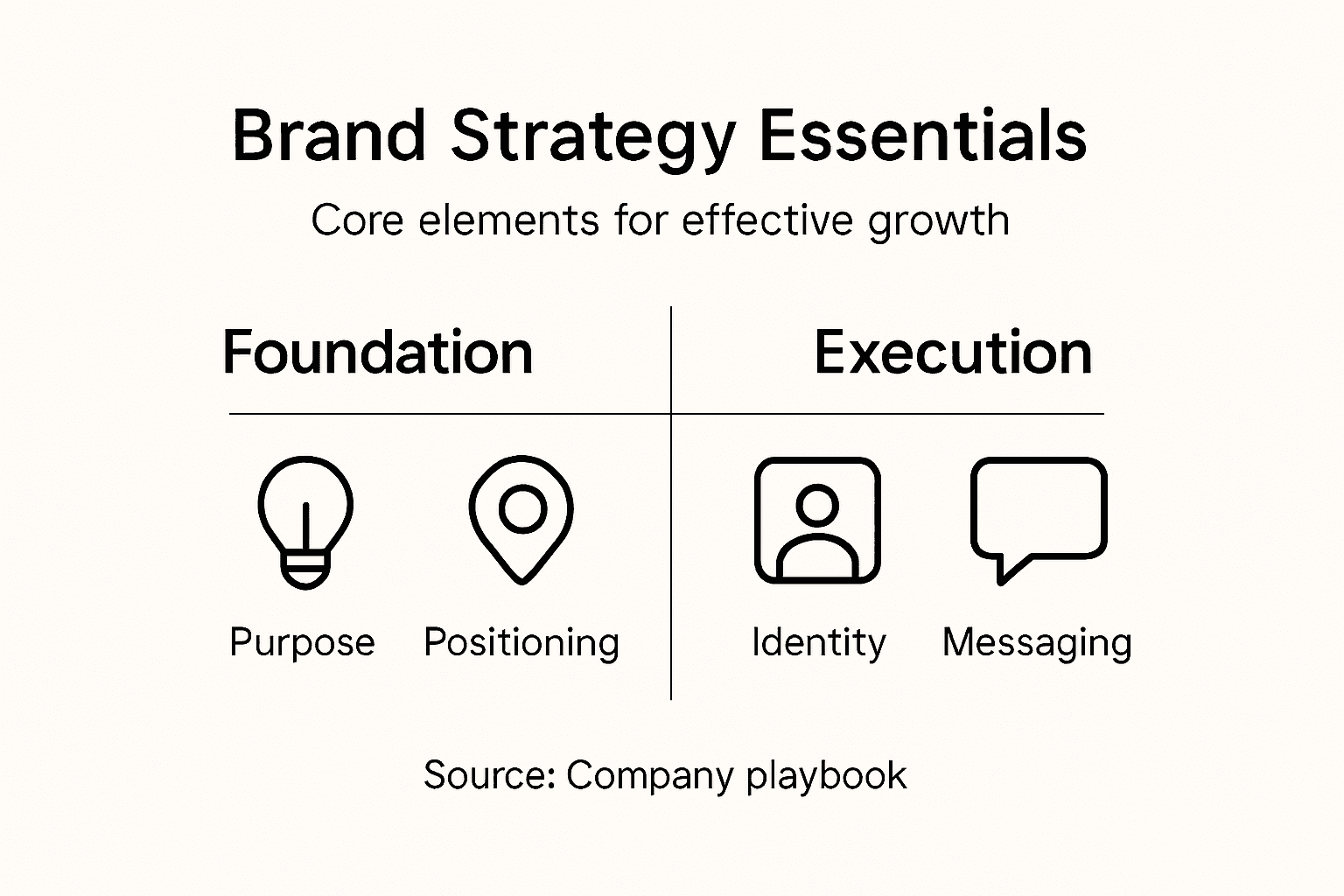
Pro tip: Conduct quarterly brand strategy assessments to ensure your positioning remains agile and responsive to changing market conditions.
Major Approaches and Frameworks Used Today
Brand management approaches represent sophisticated methodologies designed to create meaningful connections between organizations and their target audiences. These frameworks have evolved significantly, moving beyond traditional marketing concepts to embrace more holistic, relationship-driven strategies.
Key brand strategy frameworks include:
Brand Identity Prism: Developed by Jean-Noël Kapferer, focusing on six core dimensions of brand personality
Customer-Based Brand Equity Model: Emphasizing the importance of customer perceptions and experiences
Cultural Branding Framework: Exploring how brands connect with broader cultural narratives
Service Dominant Logic: Positioning brands as collaborative value creators
Stakeholder Theory Framework: Integrating multiple perspectives beyond traditional customer relationships
Each framework offers unique insights into brand development, recognizing that successful strategies must adapt to specific business contexts and evolving market dynamics. Modern approaches emphasize creating dynamic, responsive brand ecosystems that can quickly adjust to changing customer expectations and technological innovations.
Here’s a summary of how different brand strategy frameworks approach value creation:
Framework Name | Focus Area | Unique Advantage |
Brand Identity Prism | Brand personality aspects | Builds emotional connections |
Customer-Based Brand Equity | Customer perceptions | Enhances loyalty and advocacy |
Cultural Branding Framework | Cultural narratives | Aligns with social trends |
Service Dominant Logic | Value co-creation | Encourages customer engagement |
Stakeholder Theory Framework | Multiple relationships | Supports broader impact |
Effective brand frameworks transform static marketing approaches into living, breathing strategic assets that drive organizational growth and customer engagement.
Businesses must carefully select and customize these frameworks to align with their unique organizational goals, market positioning, and target audience characteristics. This requires a nuanced understanding of both theoretical models and practical implementation strategies.
Pro tip: Conduct an annual review of your brand framework to ensure it remains aligned with your organization’s evolving strategic objectives and market conditions.
Common Brand Strategy Mistakes to Avoid
Building an effective brand strategy requires navigating a complex landscape of potential pitfalls that can derail even the most well-intentioned marketing efforts. Examples of effective branding demonstrate that strategic awareness is crucial for avoiding common mistakes that undermine brand development.
Critical brand strategy mistakes businesses frequently encounter include:
Inconsistent Brand Messaging: Sending mixed signals across different communication channels
Neglecting Target Audience Research: Developing strategies without deep customer insights
Copying Competitor Approaches: Failing to differentiate and create unique brand positioning
Overlooking Internal Brand Alignment: Disconnecting external brand promises from internal culture
Rigid Brand Guidelines: Creating inflexible frameworks that cannot adapt to market changes
Many organizations inadvertently sabotage their brand strategy by treating it as a static document rather than a dynamic, evolving framework. Successful brands recognize that strategic flexibility and continuous adaptation are essential for maintaining relevance in rapidly changing market environments.
Brand strategy is not a destination, but a continuous journey of understanding, refinement, and strategic realignment.
The most dangerous mistakes often stem from a lack of comprehensive understanding of how brand strategy interconnects with broader organizational goals. Companies must develop holistic approaches that integrate brand strategy with overall business objectives, ensuring consistent and meaningful engagement with their target audience.
Pro tip: Conduct quarterly brand strategy audits to identify potential misalignments and proactively adjust your approach before minor issues become significant challenges.
How Strong Brand Strategy Accelerates Growth
Strong brand strategies transform organizational potential into measurable business growth by creating meaningful connections between companies and their target audiences. These strategies serve as powerful mechanisms for driving competitive advantage and sustainable expansion.
Key ways strong brand strategies accelerate growth include:
Market Differentiation: Establishing a unique position that separates the brand from competitors
Customer Loyalty: Building emotional connections that drive repeat business and referrals
Premium Pricing Power: Creating perceived value that allows higher margin strategies
Talent Attraction: Developing an employer brand that attracts top-tier professional talent
Investor Confidence: Demonstrating strategic clarity and consistent brand promise
Successful organizations understand that brand strategy is not a cosmetic exercise but a fundamental driver of business performance. By aligning internal capabilities with external market expectations, companies can create robust frameworks that translate brand equity into tangible financial outcomes.
To clarify brand strategy results, here’s how strong brand strategies impact business growth:
Business Area | Brand Strategy Benefit | Measurable Result |
Market Position | Unique differentiation | Increased market share |
Customer Loyalty | Lasting emotional ties | Higher retention rates |
Pricing | Enhanced perceived value | Ability to charge premium prices |
Talent Attraction | Positive employer reputation | More qualified candidates |
Investor Appeal | Clear strategic narrative | Greater investor confidence |
A compelling brand strategy acts as a strategic accelerant, converting market perception into sustainable competitive advantage.
Modern businesses must view brand strategy as a dynamic, adaptive system that continuously evolves with changing market conditions. This requires ongoing research, stakeholder engagement, and a commitment to maintaining authentic, resonant brand communication.
Pro tip: Develop a quarterly brand performance dashboard that tracks key metrics like customer sentiment, market share, and brand perception to quantify your strategy’s impact.
Unlock Your Brand’s Full Potential with Strategic Growth Solutions
Creating a strong brand strategy requires more than just ideas. It demands a clear blueprint that defines your brand purpose, market positioning, and customer experience. If you find yourself struggling with inconsistent brand messaging or unclear market differentiation, these are common challenges that can slow your growth and weaken customer loyalty. Embracing a dynamic, adaptable brand framework is critical for maintaining relevance and accelerating success in today’s fast-changing market.
Let us help you turn your brand strategy into a powerful driver of growth. At Unnamed Marketing Company, we specialize in crafting strategic growth plans that align your brand vision with actionable marketing and execution frameworks. Explore our range of Digital Products designed to refine your brand identity and communication strategies.

Take the next step in building a compelling brand that stands out and drives results. Connect with our expert team today at Unnamed Marketing Company and start turning your organizational potential into measurable business growth.
Frequently Asked Questions
What is a brand strategy?
Brand strategy is a comprehensive blueprint that outlines how a business communicates its unique value, establishes its positioning in the market, and builds emotional connections with its target audience.
Why is brand strategy important for business growth?
A strong brand strategy drives business growth by differentiating a company in the market, fostering customer loyalty, enabling premium pricing, attracting talent, and boosting investor confidence.
What are the core elements of an effective brand strategy?
The core elements of an effective brand strategy include brand purpose, market positioning, visual identity, messaging framework, and customer experience.
How can businesses measure the effectiveness of their brand strategy?
Businesses can measure the effectiveness of their brand strategy by tracking key metrics such as customer sentiment, market share, brand perception, and customer retention rates.
Recommended

Comments